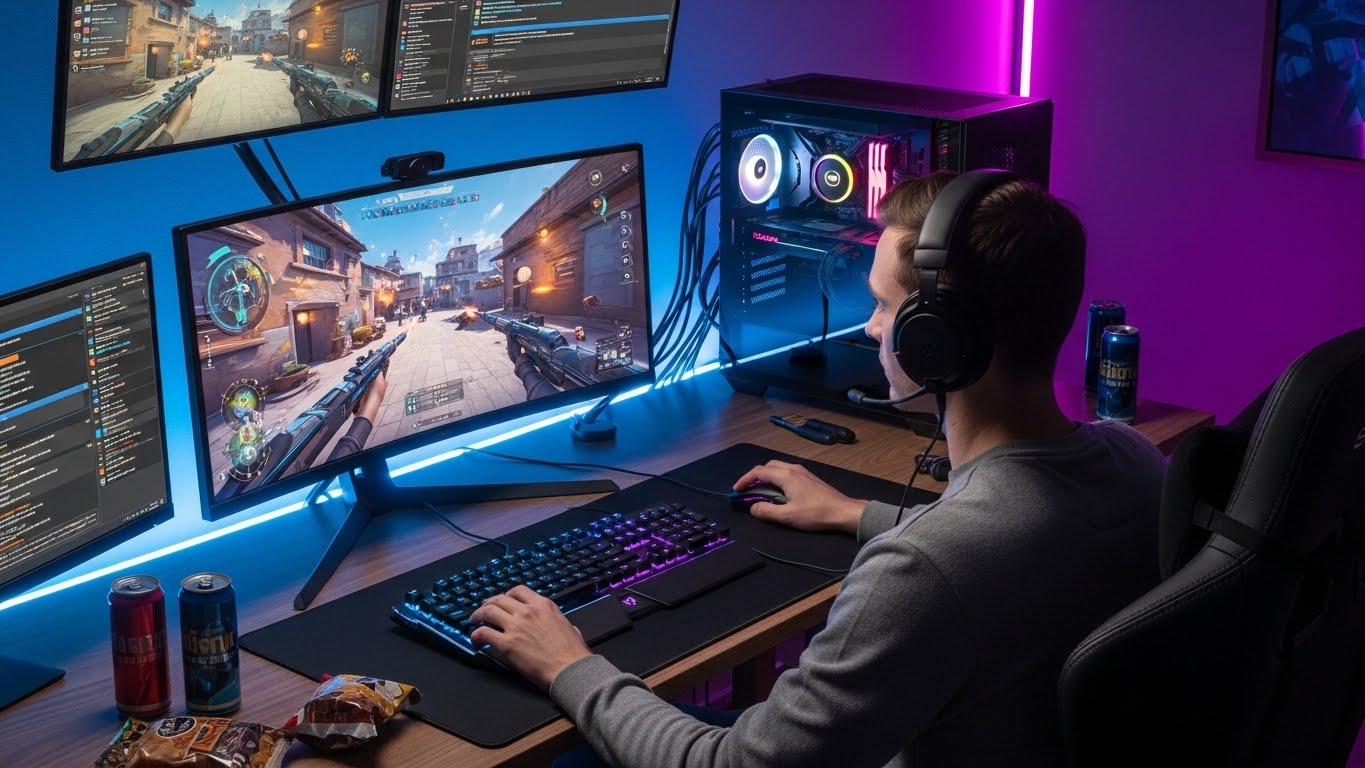

Gaming has evolved from a mere pastime to a global phenomenon, captivating millions of people across the world. It’s more than just a form of entertainment – it has become an art form, a platform for social interaction, and a vast industry contributing billions of dollars to the economy. Over the years, gaming has transitioned from simplistic 8-bit graphics to hyper-realistic experiences that feel lifelike. But what makes gaming such an enduring and transformative medium? In this blog post, we’ll explore the evolution of gaming, its cultural impact, and what the future holds for this ever-expanding world.
The Humble Beginnings: A Flashback to Classic Games
The history of video gaming dates back to the 1950s when games were simple, text-based simulations. However, it was in the early 1970s that gaming truly began to take shape. The invention of arcade games like Pong in 1972 and Space Invaders in 1978 marked the dawn of the video game industry. These early games were basic in both design and functionality, featuring pixelated graphics and simple mechanics. Despite these limitations, these games sparked a new form of entertainment, which quickly gained popularity in arcades and homes alike.
In the 1980s, the introduction of home consoles like the Atari 2600 brought gaming into living rooms across the globe. These early consoles laid the foundation for the gaming industry we know today. Although these consoles were relatively basic by today’s standards, they opened up a world of possibility for game developers and players alike. The rise of titles like Pac-Man and Donkey Kong solidified gaming as a cultural force to be reckoned with.
The Golden Age of Console Gaming
The 1990s are often considered the golden age of console gaming. This decade witnessed the introduction of powerful systems such as the Sony PlayStation, the Nintendo 64, and the Sega Dreamcast. These consoles brought with them the ability to create games with more complex graphics and deeper narratives. The rise of 3D graphics marked a dramatic shift from the 2D pixel-based worlds of earlier games, allowing for more immersive and dynamic gameplay.
Iconic franchises like Super Mario 64, The Legend of Zelda: Ocarina of Time, and Final Fantasy VII defined this era, pushing the boundaries of storytelling and gameplay mechanics. Players could now explore vast, interconnected worlds and interact with characters in ways that felt more realistic and meaningful. These games introduced complex plots, character development, and emotional stakes, making players feel more connected to the digital worlds they inhabited.
Moreover, the 1990s saw the rise of multiplayer gaming, with games like GoldenEye 007 on the Nintendo 64 and Halo on the Xbox paving the way for competitive and cooperative play. Online gaming started to take root, with early multiplayer games like Quake and Warcraft giving rise to the digital communities we see today.
The Rise of Online Gaming and the Digital Revolution
The 2000s ushered in the era of online multiplayer gaming, a revolution that would forever change the landscape of gaming. Broadband internet and the rise of multiplayer games like World of Warcraft, Counter-Strike, and Call of Duty allowed players to connect with one another across vast distances. This period also saw the launch of platforms like Xbox Live and PlayStation Network, making it easier than ever for players to connect, compete, and cooperate in virtual spaces.
Online gaming introduced a whole new layer of immersion and social interaction to the gaming experience. The concept of the “gamer” evolved from a solitary hobbyist to a global community member. Players could now communicate in real-time, form teams, and participate in worldwide competitions. The rise of esports, where players can earn substantial prize money and sponsorship deals, turned gaming into a professional career for some, with games like League of Legends and Dota 2 drawing millions of viewers to their tournaments.
Another major milestone of the 2000s was the rapid expansion of mobile gaming. With the advent of smartphones, titles like Angry Birds, Candy Crush, and Clash of Clans brought gaming to the palms of millions of people, turning gaming into a mainstream activity. This shift not only broadened the appeal of video games but also marked a major departure from the traditional console and PC-based gaming model. Casual gaming became a huge market, attracting people who may have never considered themselves “gamers” before.
The Evolution of Graphics and Technology
One of the most striking aspects of gaming is the continuous improvement in graphics and technology. What once started as simple pixelated figures and environments has now transformed into breathtaking, hyper-realistic landscapes and characters. Modern gaming hardware, such as the PlayStation 5, Xbox Series X, and high-end gaming PCs, can produce visuals that rival Hollywood-quality CGI.
This leap in graphical fidelity has been supported by the development of cutting-edge technologies like ray tracing, 4K resolution, and virtual reality (VR). Games like The Last of Us Part II, Red Dead Redemption 2, and Cyberpunk 2077 showcase the incredible detail and realism that can now be achieved. In these games, the environment is rich with texture and nuance, and the lighting is so sophisticated that it creates an almost lifelike feel.
Ray tracing, for example, allows for more realistic lighting effects, such as reflections, shadows, and ambient occlusion, which all contribute to a more immersive experience. The introduction of 4K resolution has also allowed gamers to experience their favorite titles in stunning clarity, with textures and environments rendered in such fine detail that it’s hard to distinguish them from real life.
Meanwhile, virtual reality (VR) has taken gaming to a whole new level of immersion. Platforms like the Oculus Rift and PlayStation VR have enabled players to step inside their favorite games, using motion controllers and headsets to interact with the virtual world. VR has become particularly popular in games like Beat Saber and Half-Life: Alyx, where the player’s physical movements are directly translated into the game. This opens up entirely new possibilities for game design and interaction.
The Social and Cultural Impact of Gaming
In addition to its technological advancements, gaming has had a profound impact on culture and society. It has evolved from a niche hobby into a global cultural force, influencing everything from music and film to fashion and social norms. The rise of streaming platforms like Twitch and YouTube has allowed gamers to share their experiences with millions of viewers, creating new forms of entertainment and social interaction. Professional streamers and content creators have become celebrities in their own right, attracting sponsorships, brand deals, and loyal fanbases.
Gaming has also had a significant impact on other forms of media. Many successful movies, TV shows, and books are inspired by video games. Franchises like The Witcher, Halo, and Assassin’s Creed have been adapted into television series and films, while others, like The Last of Us, have set a new standard for storytelling in games. These adaptations often blur the lines between video games and traditional media, highlighting the narrative potential of gaming.
Moreover, gaming has become a social activity in its own right. With the rise of online multiplayer games, players can connect with friends, meet new people, and build communities through shared gaming experiences. Multiplayer games have become virtual spaces for socializing, where players can chat, compete, or collaborate in real-time. Online gaming has transcended geographical boundaries, allowing people from different cultures, backgrounds, and locations to come together over a shared love of gaming.
The Future of Gaming: What’s Next?
As we look toward the future of gaming, it’s clear that the industry will continue to evolve and push the boundaries of what’s possible. The next frontier may be artificial intelligence (AI) and machine learning, which could be used to create more responsive and dynamic game worlds. Imagine a game where NPCs (non-playable characters) are not just programmed with set behaviors but can learn from the player’s actions, making the game world feel more alive and unpredictable.
The integration of cloud gaming is also set to revolutionize how we play. Services like Google Stadia, NVIDIA GeForce Now, and Xbox Cloud Gaming allow players to stream games without the need for high-end hardware. As internet speeds improve, the future of cloud gaming may allow for seamless access to any game, anytime, anywhere.
Lastly, we may see further development in the realm of virtual reality and augmented reality (AR). While VR has already made significant strides, we are still at the beginning stages of this technology. As VR headsets become more affordable and accessible, and as the technology continues to improve, VR may become the dominant platform for gaming.
Conclusion: Gaming as the Future of Entertainment
From its humble beginnings in arcades to its current status as a cultural powerhouse, gaming has come a long way. It has evolved from simple pixelated forms of entertainment to rich, immersive experiences that blur the lines between reality and virtual worlds. Gaming is no longer just about playing games – it’s about socializing, storytelling, and exploring new worlds.
As technology continues to advance, the future of gaming promises even greater innovations, from AI-driven worlds to cloud-based gaming and virtual reality. Whether you’re a lifelong gamer or just starting to dip your toes into the world of video games, one thing is certain: the world of gaming is here to stay, and it’s only going to get bigger, better, and more exciting.