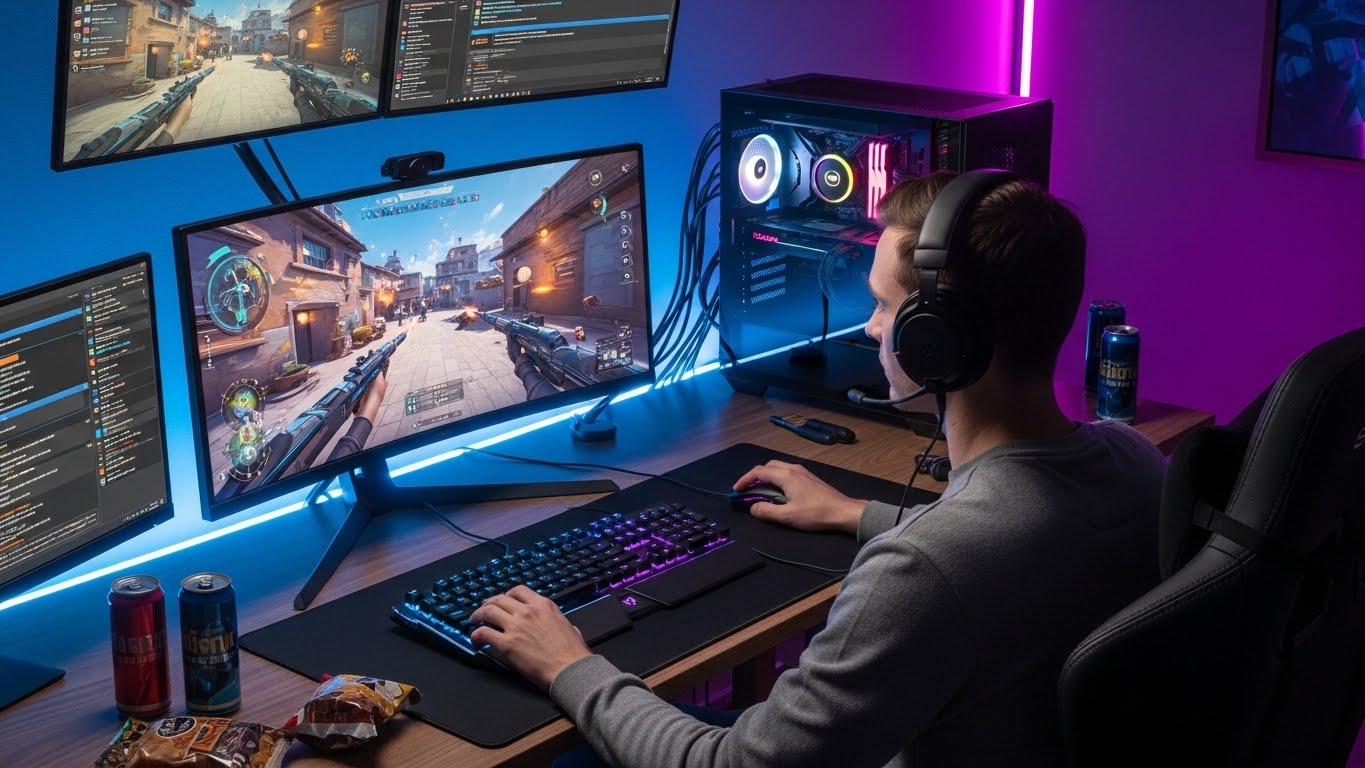
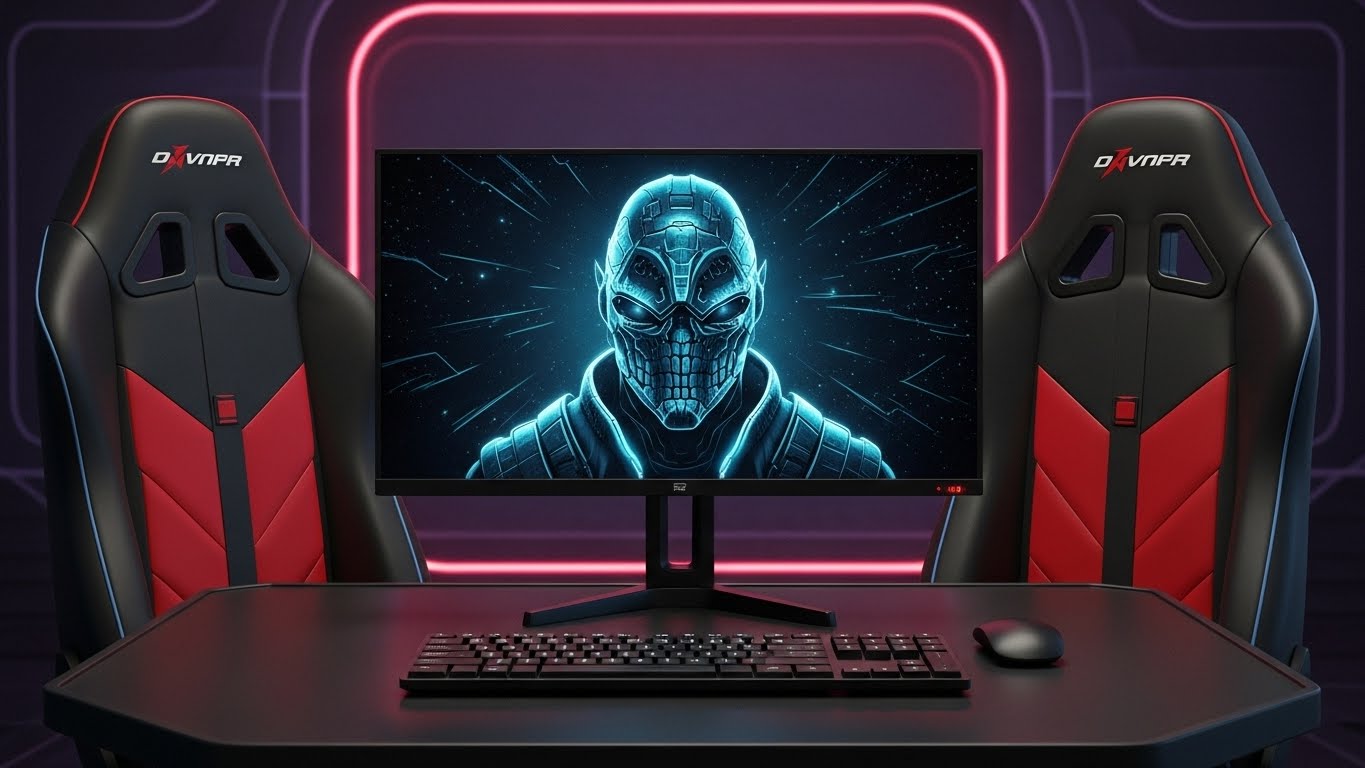
Gaming has evolved far beyond its humble beginnings as a pastime for a select few. Today, it is a global phenomenon, encompassing everything from casual mobile games to massive, immersive worlds on consoles and PCs. Whether you’re a seasoned gamer or someone just dipping your toes into the vast ocean of virtual worlds, the landscape of gaming offers a thrilling mix of entertainment, challenge, and social connection. In this post, we’ll explore the history, evolution, and significance of gaming, as well as how it continues to shape and define the modern cultural landscape.
The Origins of Gaming: A Simple Start
The roots of modern gaming can be traced back to the early 1970s when the first arcade video games started to appear in public spaces. The game Pong, released by Atari in 1972, is often credited with igniting the video game industry. It was simple, yet engaging—two paddles bouncing a ball back and forth, mimicking a game of table tennis. While rudimentary by today’s standards, Pong captivated a generation and set the stage for what was to come.
In the early days, gaming was largely limited to arcades, where individuals had to pay a few quarters to play. Consoles like the Magnavox Odyssey and Atari 2600 soon emerged, bringing gaming into people’s homes. These early consoles featured games like Space Invaders, Asteroids, and Pac-Man, all of which would go on to become iconic.
While the technology was primitive, the games themselves were designed to be fun and challenging. This balance between accessibility and difficulty helped to forge a passionate fan base that would eventually lead to the rise of a massive gaming culture.
The Golden Age of Gaming: The Rise of Consoles
The 1980s and early 1990s saw an explosion in the gaming industry, thanks to the growth of home console systems. Companies like Nintendo and Sega began producing advanced gaming consoles, which became a staple in households around the world. The Nintendo Entertainment System (NES), released in 1985, was a pivotal moment in gaming history. With its release came iconic games like Super Mario Bros., which would go on to become one of the most influential franchises in the gaming world.
The NES was followed by a wave of new gaming systems, including Sega Genesis and Super Nintendo Entertainment System (SNES), each pushing the boundaries of what video games could be. These systems featured improved graphics, sound, and game design, laying the foundation for the rich and diverse world of gaming that we know today.
At the same time, the 16-bit era ushered in a new level of complexity and depth. Games were no longer just about jumping over obstacles or shooting aliens; they began to feature intricate stories, diverse characters, and more immersive worlds. Titles like The Legend of Zelda, Final Fantasy, and Sonic the Hedgehog defined this era and became synonymous with quality gaming.
The Digital Revolution: Online Play and 3D Graphics
By the mid-1990s, gaming underwent another seismic shift—this time, in the form of 3D graphics and online multiplayer gaming. The release of Sony’s PlayStation in 1994 marked a significant milestone in the industry, ushering in the era of 3D gaming. With the PlayStation came revolutionary games like Gran Turismo and Metal Gear Solid, both of which demonstrated the power of 3D rendering and cinematic storytelling in games.
Another groundbreaking development was the expansion of online gaming. Previously, games were confined to single-player or local multiplayer experiences. However, with the introduction of the internet, gamers were suddenly able to play against others from across the world. The release of Doom in 1993 was one of the first to offer multiplayer support, and Quake took it to the next level in 1996, helping establish the foundation for the massive online gaming community we have today.
Games like Warcraft, Diablo, and Starcraft by Blizzard Entertainment became cornerstones of the online multiplayer genre, creating entire ecosystems where players could join guilds, participate in tournaments, and engage in cooperative play. These titles set the stage for today’s massively multiplayer online role-playing games (MMORPGs), like World of Warcraft.
The Modern Era: Consoles, PCs, and Mobile Gaming
Today, gaming is no longer confined to arcades or living rooms; it’s an omnipresent form of entertainment available across multiple platforms. Consoles like PlayStation 5, Xbox Series X, and Nintendo Switch continue to lead the charge in console gaming, offering stunning graphics and immersive experiences. The transition to high-definition and 4K gaming has taken visual fidelity to new heights, and advancements in virtual reality (VR) are pushing the boundaries of what we consider immersive.
On the other hand, PC gaming has become a formidable force in the gaming world. High-powered rigs with top-tier processors and graphics cards allow gamers to enjoy the most demanding games at ultra-settings, often giving them an edge in competitive gaming. Games like Fortnite, League of Legends, and Counter-Strike: Global Offensive have built vast, competitive communities, and eSports has evolved into a billion-dollar industry. These titles are often at the forefront of digital culture, with tournaments and live streams attracting millions of viewers globally.
Meanwhile, mobile gaming has exploded in popularity, largely due to the proliferation of smartphones. Games like Candy Crush, Clash of Clans, and Pokémon GO have tapped into the casual gaming market, offering bite-sized experiences that anyone can enjoy. With games being so easily accessible on mobile platforms, gaming has become an activity for people of all ages, not just those who consider themselves hardcore gamers.
The Impact of Gaming on Society and Culture
Beyond entertainment, gaming has had a profound impact on society. It’s become a medium for storytelling, an art form that blends visuals, music, and narrative into a cohesive experience. Games like The Last of Us, Red Dead Redemption 2, and The Witcher 3 have elevated video games into an art form, earning critical acclaim for their storytelling, world-building, and emotional depth. These titles have helped to show that video games can be just as impactful and meaningful as any other form of media, such as films or novels.
Moreover, gaming has become a social experience. Online multiplayer games allow players to connect with friends and strangers alike, creating tight-knit communities around games. Discord, Twitch, and other platforms have made it easier than ever to stream gameplay, watch others play, and communicate with fellow gamers. For many, gaming is more than just an activity—it’s a social lifeline, an opportunity to bond with others over shared experiences.
Gaming as an Industry: From Hobby to Multi-Billion-Dollar Business
What was once a niche hobby is now one of the biggest entertainment industries in the world. In 2022, the global video game industry generated over $180 billion in revenue, surpassing both the film and music industries combined. The success of gaming has attracted big business, with companies like Microsoft, Sony, Tencent, and Apple leading the charge in both hardware and software development.
The rise of digital distribution platforms like Steam and Epic Games Store has also helped to change the way games are sold. Independent developers have gained unprecedented access to global audiences, making it easier than ever to create and distribute games without the need for large publishers. Platforms like Kickstarter have even allowed indie developers to crowdfund their projects, enabling innovative games to be created without the constraints of a traditional publisher.
At the same time, gaming has become a career for many, with eSports athletes, game streamers, and content creators earning lucrative incomes. Platforms like YouTube and Twitch have created new avenues for monetizing gaming content, giving rise to a new generation of celebrity gamers and influencers.
The Future of Gaming: Virtual Reality, AI, and Beyond
Looking forward, the future of gaming is filled with exciting possibilities. Virtual reality (VR) and augmented reality (AR) are two technologies poised to redefine the way we interact with games. Companies like Oculus (now owned by Meta) and Sony are pushing the envelope with VR headsets, promising truly immersive gaming experiences that could transport players into completely new worlds.
Artificial intelligence (AI) is also playing a growing role in shaping the future of gaming. From more intelligent enemies in single-player games to dynamic, player-driven narratives, AI will continue to make games more responsive and lifelike. AI-generated content and procedural storytelling could open up new avenues for developers, allowing for limitless variations and experiences in games.
The growth of cloud gaming is another trend that may reshape the industry. Services like Google Stadia, Xbox Cloud Gaming, and Nvidia GeForce Now allow gamers to stream high-quality games without the need for expensive hardware, making gaming more accessible to a broader audience. This could significantly change how games are distributed and played, further breaking down the barriers between different platforms.
Conclusion: A World of Possibilities
The world of gaming is more dynamic and exciting than ever before. With its rich history, evolving technology, and impact on culture and society, gaming is no longer just a form of entertainment—it’s a powerful force that shapes how we connect, create, and experience the world. Whether through the nostalgia of retro games or the groundbreaking potential of new technologies, gaming is sure to continue thrilling players for generations to come. The journey through this digital landscape is far from over, and with each passing year, we can expect to see even more innovation, creativity, and excitement in the world of gaming.