
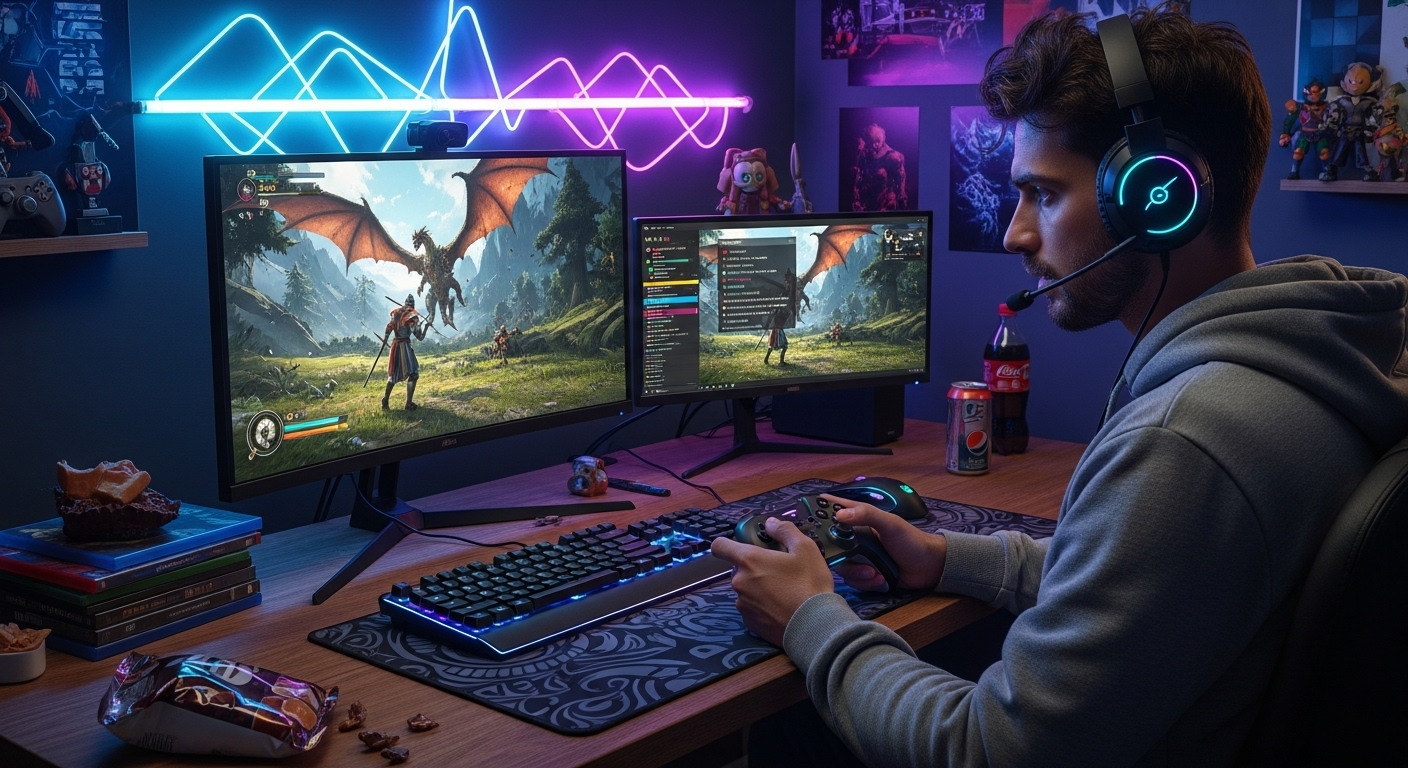
Introduction: The Evolution of Gaming
Gaming has transformed dramatically over the past few decades. What was once a simple form of entertainment, limited to arcades and home consoles, has grown into a global cultural phenomenon. Today, gaming is more than play; it is an art form, a social connector, and an industry worth billions of dollars. With millions of people engaging with games daily, whether through mobile apps, consoles, or PC platforms, gaming has become an integral part of modern life. It is a medium that challenges the mind, sparks creativity, and fosters community on a scale unmatched by most other forms of entertainment.
This blog explores the evolution of gaming, its types, benefits, cultural significance, economic impact, and the promising future that lies ahead.
The History of Gaming
The origins of gaming trace back thousands of years. Ancient civilizations engaged in competitive play through board games, strategy contests, and physical challenges. The Egyptians played Senet, an early board game, while China produced Go, a strategic game emphasizing long-term planning. Chess, originating in India, became a worldwide phenomenon, emphasizing foresight, strategy, and competition.
The 20th century introduced video games, beginning with simple arcade games like Pong and Pac-Man. The rise of home consoles in the 1980s brought gaming into living rooms worldwide, creating a new era of personal entertainment. As technology evolved, games became more sophisticated, integrating rich storytelling, realistic graphics, and interactive mechanics that allow players to shape virtual worlds and narratives. The introduction of online multiplayer functionality expanded gaming from solitary play to global interaction, connecting millions of players simultaneously.
Types of Gaming Experiences
Gaming is a diverse medium, catering to a wide range of interests and skill sets.
1. Video Games: From action-packed shooters to immersive role-playing games, video games engage players through interactive storytelling, complex gameplay, and visually stunning worlds. Titles like adventure games or open-world RPGs allow players to explore expansive virtual landscapes, make decisions, and shape outcomes.
2. Mobile Games: With the proliferation of smartphones, gaming has become accessible to almost anyone. Mobile games range from casual puzzle games to competitive multiplayer experiences, providing entertainment for all age groups and lifestyles.
3. Board and Card Games: These traditional games remain relevant today, teaching strategy, planning, and critical thinking while encouraging face-to-face social interaction. Games like Monopoly, Settlers of Catan, or card games challenge problem-solving skills and offer social bonding opportunities.
4. Simulation and Strategy Games: These games provide creative or tactical experiences, allowing players to build cities, manage resources, or simulate real-world professions. Strategy games, in particular, encourage careful planning, foresight, and adaptability.
5. Competitive and Esports Games: Gaming has evolved into a professional competitive arena, where players participate in tournaments watched by millions worldwide. Esports includes titles across multiple genres, offering players a career path and fans a highly engaging spectacle.
Each type of gaming offers unique experiences, stimulating different skills and emotions, making gaming a versatile and inclusive medium.
Cognitive Benefits of Gaming
Gaming has far-reaching cognitive benefits beyond entertainment. Strategic games, puzzle challenges, and complex simulations enhance critical thinking, problem-solving, and decision-making. Players learn to anticipate consequences, adapt strategies, and make split-second judgments that strengthen mental agility.
Action and fast-paced games improve hand-eye coordination, reflexes, and spatial awareness. Adventure and role-playing games enhance memory retention, as players track quests, characters, and intricate storylines. Even casual games, often underestimated, exercise pattern recognition, concentration, and adaptability, demonstrating that gaming contributes significantly to cognitive development across age groups.
Emotional and Psychological Advantages
Gaming also fosters emotional growth. Players encounter challenges, setbacks, and victories in a controlled environment, learning resilience and perseverance. Overcoming difficult levels or achieving in-game milestones creates a sense of accomplishment and boosts self-confidence.
Games provide a healthy outlet for stress relief and emotional regulation. Immersive worlds allow players to step away from real-life pressures, offering a form of relaxation and escapism. Cooperative or multiplayer games cultivate empathy, teamwork, and social skills, while competitive gaming teaches sportsmanship and the ability to manage both success and failure gracefully.
Social Dimensions of Gaming
Gaming has evolved into a deeply social medium. Multiplayer games and online platforms connect millions of players worldwide, creating communities where friendships are formed and collaboration thrives. Players engage with teammates and opponents, developing communication, negotiation, and leadership skills.
The rise of online communities and social gaming events has made games a shared experience. Players celebrate milestones together, exchange strategies, and support each other’s growth. Gaming conventions, tournaments, and live streaming further strengthen social bonds, transforming gaming into a cultural and communal experience that transcends geographical boundaries.
Educational Value of Games
Educational games have transformed learning by making it interactive and engaging. Through gameplay, complex concepts in mathematics, science, language, and history can be explored creatively and memorably. Gamification encourages participation, critical thinking, and experimentation, making learning enjoyable and effective.
Simulation games, in particular, teach life skills like time management, resource allocation, and strategic planning. Role-playing and interactive storytelling in educational games allow learners to experience real-world scenarios in a safe environment, fostering decision-making, leadership, and problem-solving skills.
Cultural Impact of Gaming
Gaming has become a significant cultural force. Characters, narratives, and worlds from games influence music, film, art, and fashion. Gaming culture includes conventions, fan communities, streaming personalities, and content creation, which celebrate creativity and shared experiences.
Games are a medium of storytelling and artistic expression. Immersive environments, emotional narratives, and interactive choices allow players to engage deeply with content, creating emotional and cognitive experiences unparalleled in traditional media. Through gaming, cultural values, historical perspectives, and creative visions are transmitted and experienced globally.
Economic Significance of Gaming
The gaming industry is a major economic driver, generating revenue from game sales, in-game purchases, subscriptions, and merchandising. The rise of esports, competitive streaming, and content creation has created new career paths and job opportunities in marketing, design, production, commentary, and game development.
Gaming also fuels technological innovation. Advances in graphics, artificial intelligence, and virtual reality often emerge from gaming research, benefiting broader technology sectors. Its economic influence spans entertainment, education, media, and technology, making gaming a cornerstone of the modern digital economy.
Technological Innovations in Gaming
Technology continually shapes the gaming landscape. Graphics and physics engines produce realistic environments, while virtual reality and augmented reality create immersive experiences. Cloud gaming allows players to access high-quality games without expensive hardware, making gaming more accessible.
Artificial intelligence enhances game design by creating adaptive challenges and smarter in-game opponents. Interactive features, motion controls, and haptic feedback deepen immersion, ensuring that gameplay continues to evolve dynamically. As technology advances, the boundaries of gaming experiences will continue to expand, integrating more seamlessly into daily life.
Professional Opportunities in Gaming
Gaming is no longer just a hobby; it is a viable professional pursuit. Esports players compete at high levels, earning salaries, sponsorships, and prizes. Streaming platforms allow individuals to create content, build communities, and generate income.
Game development provides opportunities in design, programming, writing, sound design, and animation. Event management, marketing, journalism, and education are additional avenues for building careers in the gaming ecosystem. This professionalization reflects gaming’s maturity as an industry and its potential for creative and financial growth.
The Future of Gaming
The future of gaming is filled with possibilities. Virtual reality, augmented reality, artificial intelligence, and cloud technology will transform gameplay and player interaction. Games will become more immersive, adaptive, and personalized.
Gaming will continue to expand as a social, educational, and cultural medium. New generations growing up with gaming as an integral part of life will experience enhanced creativity, problem-solving skills, and collaboration. With its ability to entertain, educate, and inspire, gaming will remain a central aspect of human culture for decades to come.
Conclusion: The Enduring Impact of Gaming
Gaming is far more than entertainment; it is a cultural, cognitive, and economic force. It shapes creativity, enhances learning, fosters social connections, and provides emotional growth. From ancient board games to modern immersive digital worlds, gaming reflects human ingenuity and our desire for challenge, exploration, and connection.
As gaming continues to evolve, it will redefine the way we think, interact, and create. It offers endless opportunities for personal development, professional careers, and global community building. In the modern world, gaming is a testament to the power of imagination and play, proving that interactive experiences are not just pastimes—they are transformative forces shaping the future.