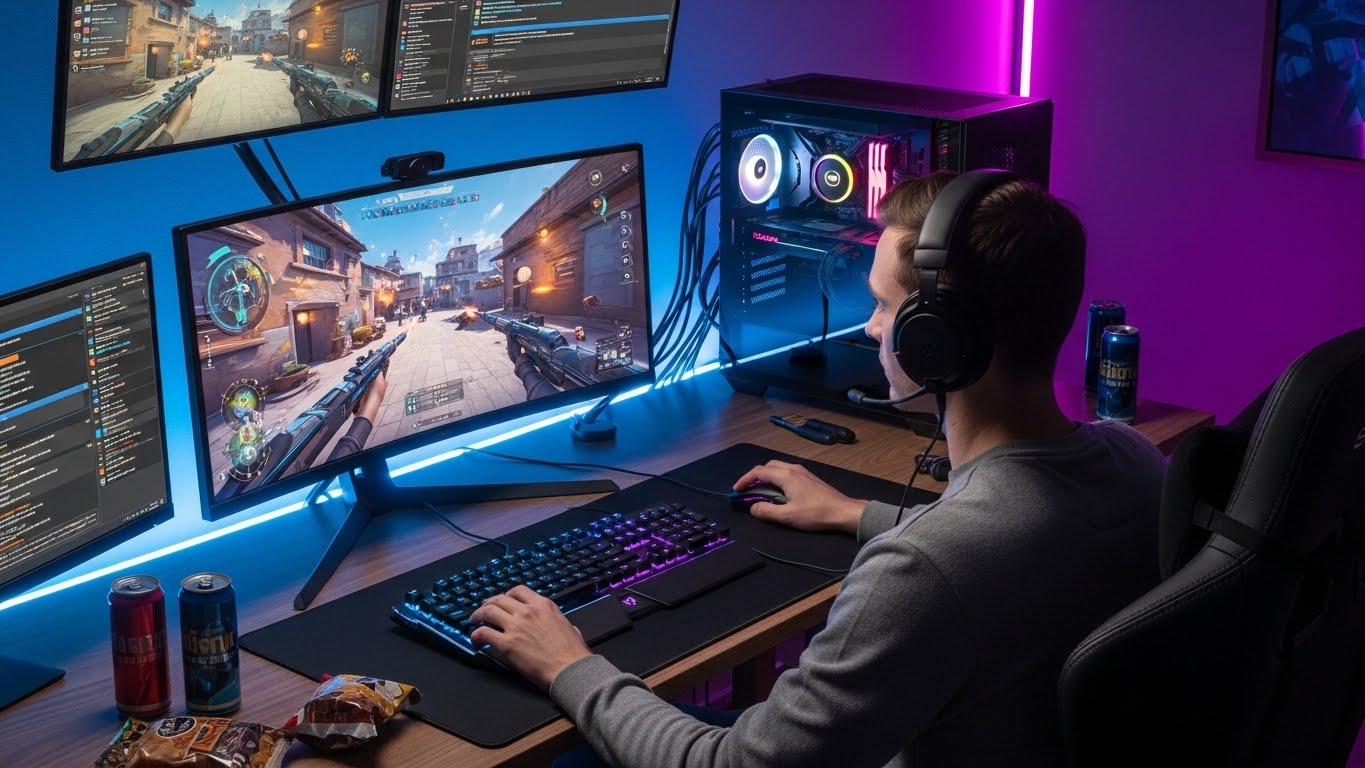
Gaming has grown from a niche hobby into a global cultural phenomenon, captivating millions of people across all age groups. What was once considered a pastime for children and teenagers has evolved into a sophisticated industry with competitive esports, immersive virtual worlds, and innovative storytelling. Today, gaming combines technology, creativity, strategy, and social interaction, making it a multifaceted form of entertainment that influences culture, education, and even the economy. This blog explores the evolution, benefits, and impact of gaming while examining its future potential.
The Evolution of Gaming
The history of gaming spans decades, beginning with simple arcade games and console titles in the 1970s and 1980s. Early classics like Pong, Space Invaders, and Pac-Man introduced players to interactive digital experiences, laying the foundation for more complex gameplay. The 1980s and 1990s saw the rise of home consoles, including the Nintendo Entertainment System and Sega Genesis, which brought gaming into living rooms worldwide.
The 1990s also marked the emergence of PC gaming and online multiplayer experiences. Titles like Doom, Quake, and Warcraft pioneered networked gameplay, enabling players to compete and collaborate across distances. The 2000s introduced high-definition graphics, immersive storytelling, and open-world games that offered expansive environments and rich narratives.
Today, gaming encompasses multiple platforms, including consoles, PCs, and mobile devices, and spans genres such as role-playing games, first-person shooters, strategy games, and simulation experiences. The industry continues to grow exponentially, with technological advancements driving more realistic graphics, artificial intelligence, and virtual reality experiences.
The Global Gaming Industry
Gaming has evolved into a multi-billion-dollar industry, surpassing traditional entertainment sectors such as film and music in revenue. Professional esports tournaments, live streaming platforms, and in-game purchases contribute significantly to the industry’s financial growth. Countries such as the United States, South Korea, and China are at the forefront of competitive gaming, supporting professional teams, leagues, and dedicated training facilities.
Gaming companies operate like major entertainment corporations, producing blockbuster titles, managing marketing campaigns, and engaging with global communities. Mobile gaming has also expanded access, allowing millions of people to play anytime, anywhere. The industry’s growth has created career opportunities for game developers, designers, esports athletes, streamers, content creators, and analysts, making gaming an economically and culturally influential force.
The Cognitive and Educational Benefits of Gaming
Contrary to common misconceptions, gaming offers numerous cognitive and educational benefits. Many games require critical thinking, problem-solving, and strategic planning. Players often analyze complex systems, anticipate opponents’ actions, and make rapid decisions under pressure. These skills are transferable to academic, professional, and real-life situations.
Educational games and simulations are increasingly used in classrooms to teach subjects such as mathematics, science, history, and language skills. Game-based learning encourages engagement, experimentation, and creativity. For example, simulation games allow students to explore ecosystems, manage resources, or solve historical challenges, offering immersive learning experiences that traditional methods cannot replicate.
Gaming and Mental Health
Gaming also has mental health benefits when practiced in moderation. Engaging in interactive games provides relaxation, stress relief, and cognitive stimulation. Adventure and puzzle games challenge the mind, improving memory, spatial awareness, and attention to detail. Cooperative and multiplayer games foster social interaction, teamwork, and communication skills, contributing to emotional well-being.
Gaming can also help develop resilience. Players often face challenges, setbacks, and repeated failures, learning to adapt strategies, persevere, and achieve goals. The sense of accomplishment and progress in games can boost self-esteem and motivation, reinforcing positive behavioral patterns.
Social Interaction and Community in Gaming
Gaming is increasingly a social activity, connecting players across the globe. Online multiplayer games, social platforms, and esports tournaments provide opportunities for collaboration, competition, and community building. Players can join guilds, clans, or teams, creating friendships and networks that extend beyond virtual worlds.
Esports communities, streaming platforms, and gaming forums foster discussion, sharing of strategies, and fan engagement. Fans follow professional players, analyze gameplay, and participate in digital events, creating a sense of belonging and collective identity. Gaming has thus become a medium for social interaction, cultural exchange, and global connection.
Competitive Gaming and Esports
Esports represents the professionalization of gaming, where players compete at elite levels in tournaments with substantial prize pools. Games like League of Legends, Dota 2, Counter-Strike, and Fortnite have dedicated competitive scenes that attract millions of viewers online and in arenas worldwide.
Professional esports athletes train rigorously, focusing on strategy, teamwork, reflexes, and mental resilience. Coaches, analysts, and support staff help optimize performance, mirroring the structure of traditional sports teams. Esports has grown into a legitimate career path, providing salaries, sponsorships, and global recognition for talented players.
Gaming as a Cultural Phenomenon
Gaming has transcended entertainment to become a cultural force. It influences fashion, music, media, and social trends. Iconic game characters, storylines, and universes are part of popular culture, inspiring movies, merchandise, and fan art. Gaming conventions, live events, and online streams bring fans together, creating shared experiences and global communities.
Games also explore themes of morality, storytelling, and social issues, reflecting broader cultural narratives. Players engage with stories that challenge perspectives, encourage empathy, and provoke critical thinking, demonstrating that gaming is not merely recreational but also a medium for cultural expression.
Technology Driving the Gaming Experience
Technological advancements have been crucial in shaping modern gaming. Graphics engines, virtual reality, augmented reality, and artificial intelligence have created immersive and interactive experiences. Realistic physics, dynamic environments, and advanced AI opponents enhance gameplay and player engagement.
Streaming technology has also transformed gaming culture. Platforms allow players to broadcast gameplay live, interact with audiences, and create digital content. This convergence of technology and entertainment has amplified gaming’s reach, making it a central part of modern media and social interaction.
The Economic Impact of Gaming
The gaming industry contributes significantly to the global economy. Game development, marketing, esports, and streaming generate employment and revenue on multiple levels. Major titles create millions in sales, while live events and tournaments attract tourism and sponsorship investment. Mobile gaming has expanded revenue potential further, allowing casual players to participate and spend within digital ecosystems.
Additionally, the industry has spurred innovation in related sectors, including software development, hardware manufacturing, and digital marketing. Gaming’s economic influence demonstrates its importance as both a cultural and financial powerhouse.
Challenges in the Gaming World
Despite its many benefits, gaming faces challenges. Excessive gameplay can lead to addiction, social isolation, and reduced physical activity. Balancing screen time and healthy habits is essential to prevent negative consequences.
The industry also grapples with ethical concerns such as violence in games, inclusivity, harassment, and representation. Ensuring games are accessible, respectful, and safe for diverse audiences is an ongoing priority. Game developers, communities, and organizations are increasingly addressing these challenges through policies, education, and awareness campaigns.
The Future of Gaming
The future of gaming promises continued innovation and expansion. Virtual reality and augmented reality will create fully immersive worlds where players can explore, interact, and compete in unprecedented ways. Artificial intelligence will enhance adaptive gameplay, personalized experiences, and dynamic storytelling.
Cloud gaming and streaming technologies will reduce hardware barriers, making high-quality experiences accessible to more players worldwide. Social integration will continue to evolve, connecting global communities and creating shared cultural experiences. Gaming is poised to become not just entertainment but also a platform for learning, creativity, and social engagement.
Gaming as an Educational and Career Path
Gaming has opened new educational and professional avenues. Game development programs, coding courses, and esports academies train individuals for careers in game design, programming, animation, and competitive play. Skills learned through gaming—problem-solving, teamwork, and strategic thinking—are valuable in diverse professional fields, demonstrating the practical potential of gaming beyond entertainment.
Educational institutions increasingly recognize gaming’s value, integrating it into curricula and using game-based learning methods. From simulations to interactive lessons, games enhance engagement, critical thinking, and creativity in students of all ages.
Conclusion
Gaming is a dynamic and multifaceted domain that transcends entertainment. It fosters cognitive growth, emotional resilience, social interaction, and cultural engagement. With advancements in technology, gaming experiences are more immersive, interactive, and accessible than ever before.
The rise of esports has created professional opportunities, while game-based learning demonstrates its educational potential. Gaming influences culture, economy, and society, shaping a new digital frontier for creativity, connection, and innovation.
As technology evolves, gaming will continue to transform how people play, learn, and interact. It is not merely a pastime but a platform where skill, imagination, and community converge. Whether as a player, a professional, or a fan, gaming offers experiences that entertain, challenge, and inspire, solidifying its place as one of the most influential cultural forces of the modern era.