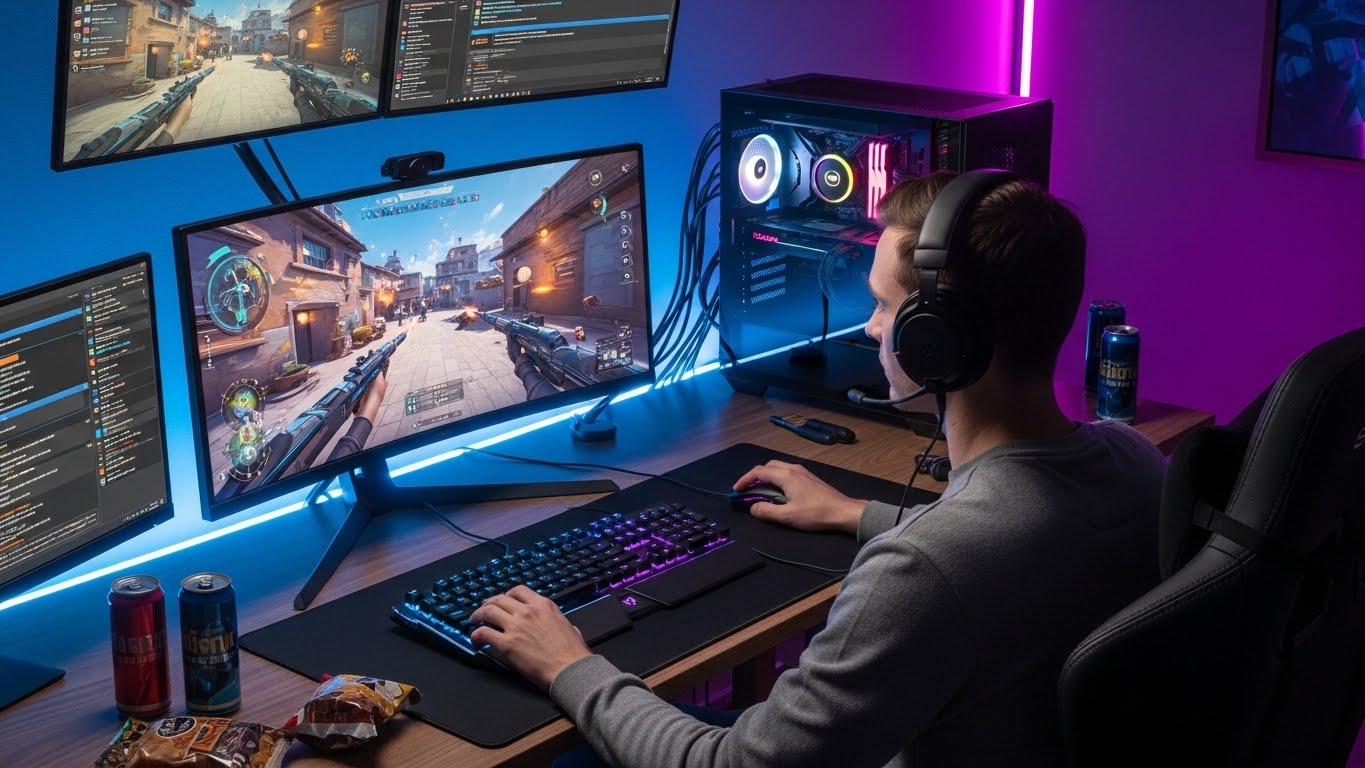

Gaming has grown beyond the realm of a niche hobby to become one of the most influential forms of entertainment in the world. With technological advancements, creative breakthroughs, and an ever-expanding community of players, gaming has evolved into an art form that touches nearly every facet of modern culture. From its humble beginnings in arcades to immersive, expansive virtual worlds today, gaming has never been more integral to how we relax, socialize, and even learn. This blog post will explore the fascinating evolution of gaming, its current impact on society, and the exciting future that lies ahead.
The Origins of Gaming: From Simple Pastimes to Global Phenomenon
The history of gaming dates back centuries, with early games like chess and Go demonstrating mankind’s love for strategy and competition. However, the birth of video gaming as we know it today started in the mid-20th century. In 1958, a computer scientist named William Higinbotham created a simple tennis game called “Tennis for Two” on an oscilloscope. This rudimentary form of interactive entertainment is considered one of the first video games. Later, in 1972, Atari’s “Pong,” a simplistic simulation of table tennis, became one of the first commercially successful video games and paved the way for the video game industry we know today.
Arcades in the 1970s and 1980s were home to the first gaming consoles, where people would gather to play games like “Space Invaders” and “Pac-Man.” The 1980s were a turning point in the history of gaming, with home consoles like the Nintendo Entertainment System (NES) making gaming more accessible. This shift from arcades to home entertainment marked the beginning of gaming as a mainstream activity.
The Rise of Console Gaming: A New Era
As we moved into the 1990s, gaming technology continued to advance rapidly. The introduction of 16-bit gaming systems like the Sega Genesis and Super Nintendo Entertainment System (SNES) offered players more vivid graphics and more complex gameplay than ever before. It was in this era that gaming really began to gain popularity among all age groups, with titles like “Super Mario World,” “Sonic the Hedgehog,” and “The Legend of Zelda” becoming household names.
The 1990s were also the golden age for the evolution of 3D gaming. The release of Sony’s PlayStation in 1994 ushered in a new era of immersive, three-dimensional games that felt like nothing else at the time. Games like “Gran Turismo” and “Final Fantasy VII” showcased the full potential of 3D graphics and storytelling. These advancements in both game design and technology changed how games were developed and consumed.
PC Gaming: A Powerful Alternative to Consoles
While console gaming enjoyed widespread success in the 1990s, PC gaming was also establishing itself as a major player in the industry. Personal computers had the advantage of being highly customizable, allowing gamers to upgrade their systems to get the best possible performance. In addition, PC gaming allowed for more diverse genres and styles of gameplay.
In the early 2000s, titles like “The Sims,” “World of Warcraft,” and “Counter-Strike” helped solidify the role of PC gaming in the broader gaming ecosystem. These games often required an internet connection, marking the rise of online multiplayer games, where players could compete or cooperate with others from across the globe. The advent of online gaming with services like Steam in the mid-2000s made it easier for players to purchase and download games, which further fueled the growth of PC gaming.
Moreover, the flexibility of PC gaming also allowed for modding — a practice where players create custom modifications to enhance or alter a game. Mods became an essential part of the gaming culture, and some of the most famous games today, such as “Minecraft” and “Counter-Strike,” were originally mods of existing games.
The Mobile Revolution: Gaming in Your Pocket
In the late 2000s, the introduction of smartphones with powerful processors and high-quality screens brought about a new era of gaming. Suddenly, games weren’t just something you played at home or in an arcade; they were accessible in the palm of your hand. Mobile gaming has since become a massive market, with games like “Angry Birds,” “Candy Crush,” and “Clash of Clans” reaching millions of players across the globe.
Mobile gaming’s accessibility and ease of use revolutionized the industry. Free-to-play models, often supported by in-app purchases, created a new business model that allowed players to access games without upfront costs, while developers could earn revenue through microtransactions. The shift to mobile also encouraged the rise of casual gaming, attracting a broad demographic of players who previously might not have identified as “gamers.”
Despite its widespread success, mobile gaming also raised new challenges, particularly around game design. Developers had to rethink how to create engaging experiences that could be played in short bursts, while still providing long-term entertainment. Puzzle games, strategy games, and even story-driven experiences adapted to mobile platforms, showcasing the versatility and reach of mobile gaming.
The Social Dimension: How Gaming Connects Us
One of the most profound effects of gaming in the past few decades has been its ability to bring people together. While traditional gaming had often been a solitary activity, the rise of online multiplayer games and social gaming platforms allowed players to connect with others in unprecedented ways.
MMORPGs (Massively Multiplayer Online Role-Playing Games) like “World of Warcraft” and “Final Fantasy XIV” created vast online worlds where players could form guilds, go on quests, and build lasting friendships. Players from different countries could team up and communicate in real-time, making gaming one of the most social forms of entertainment.
In addition, platforms like Twitch and YouTube Gaming allowed gamers to stream their gameplay for a live audience, creating a new form of interactive entertainment. This has given rise to gaming influencers and streamers who have turned their passion into full-time careers. The social aspect of gaming has become so ingrained in modern culture that it has even influenced the way we approach traditional sports, with eSports now becoming a mainstream competitive activity.
eSports: The Professionalization of Gaming
eSports, or electronic sports, has quickly become one of the fastest-growing industries in entertainment. Competitive gaming, once a hobby, is now a professional career for many players, with tournaments like “The International” (for Dota 2) and the “League of Legends World Championship” attracting millions of viewers.
eSports events are broadcast globally, often drawing massive crowds to live events and online streams. The prize pools for these tournaments can reach millions of dollars, making competitive gaming a lucrative career path for top players. Major gaming companies, including Riot Games, Blizzard Entertainment, and Valve, invest heavily in eSports, organizing tournaments, building infrastructure, and creating leagues for professional players.
The rise of eSports has led to the creation of gaming teams, sponsorships, broadcasting deals, and even college scholarships for aspiring professional players. Just like traditional sports, eSports has built a massive, global fanbase, and it continues to grow at an exponential rate.
Virtual Reality and Augmented Reality: The Future of Gaming
As gaming technology continues to advance, we are seeing the rise of Virtual Reality (VR) and Augmented Reality (AR) as the next frontiers in immersive gaming experiences. VR gaming immerses players in fully realized 3D worlds, where they can interact with environments and objects as if they were physically present. Games like “Beat Saber” and “Half-Life: Alyx” demonstrate the potential of VR, offering players a level of immersion that traditional gaming has never been able to achieve.
On the other hand, AR gaming blends the real world with virtual elements, allowing players to interact with their physical surroundings while engaging with digital content. “Pokémon GO” is a prime example of this, as players explore the real world while searching for virtual creatures that exist in the game’s augmented world.
Both VR and AR are still in their early stages, but they promise to reshape gaming in the coming years. As the technology improves and becomes more accessible, we can expect even more groundbreaking experiences that blur the lines between reality and digital worlds.
Conclusion: Gaming’s Future and Endless Possibilities
The world of gaming has evolved tremendously since its inception, transforming from a niche activity into a global cultural force. Whether it’s the immersive virtual worlds of AAA games, the competitive thrill of eSports, or the social connections forged in multiplayer games, gaming is no longer just entertainment — it’s an integral part of modern culture.
As technology continues to improve, the possibilities for gaming are endless. With the rise of VR, AR, cloud gaming, and AI-driven experiences, the gaming landscape is poised to become even more dynamic and immersive. As gaming continues to bring people together and inspire creativity, we can only imagine what the future holds. One thing is certain: gaming will continue to shape our world for years to come.