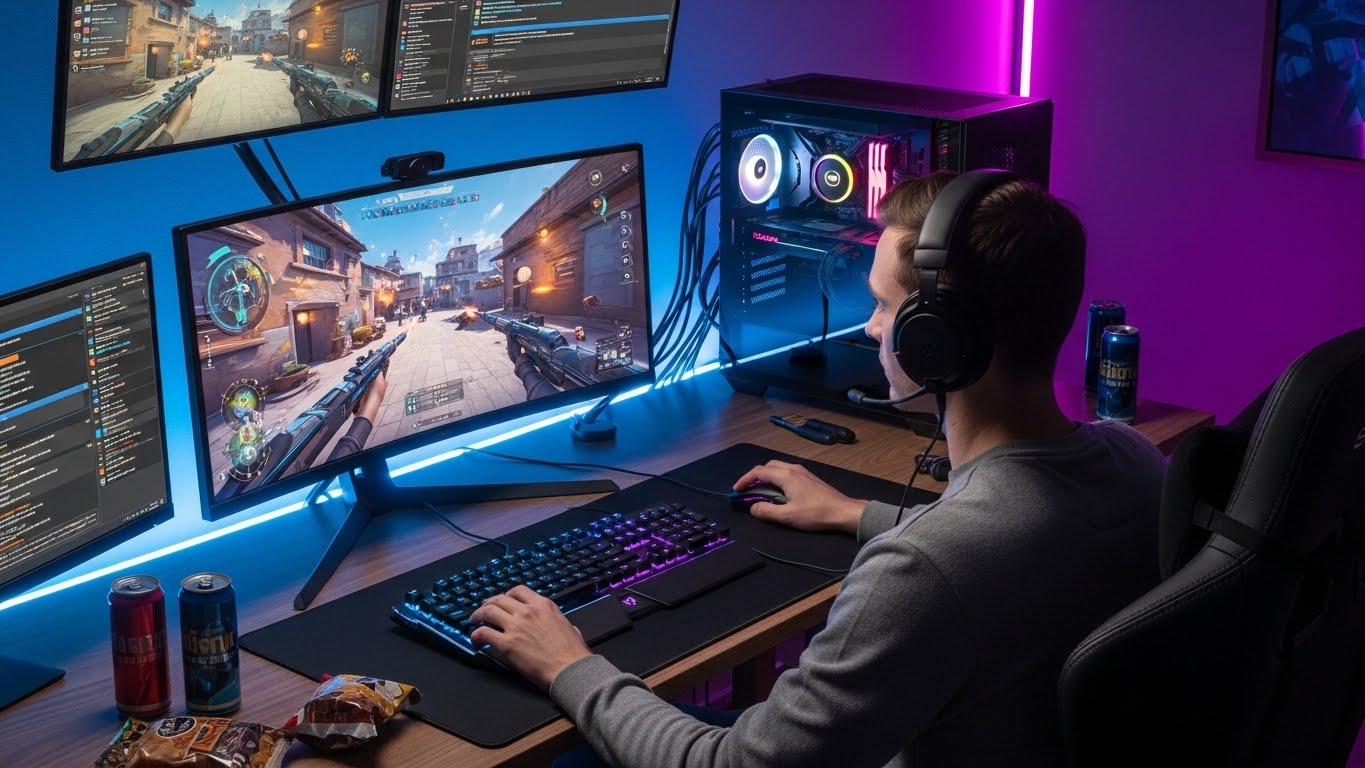
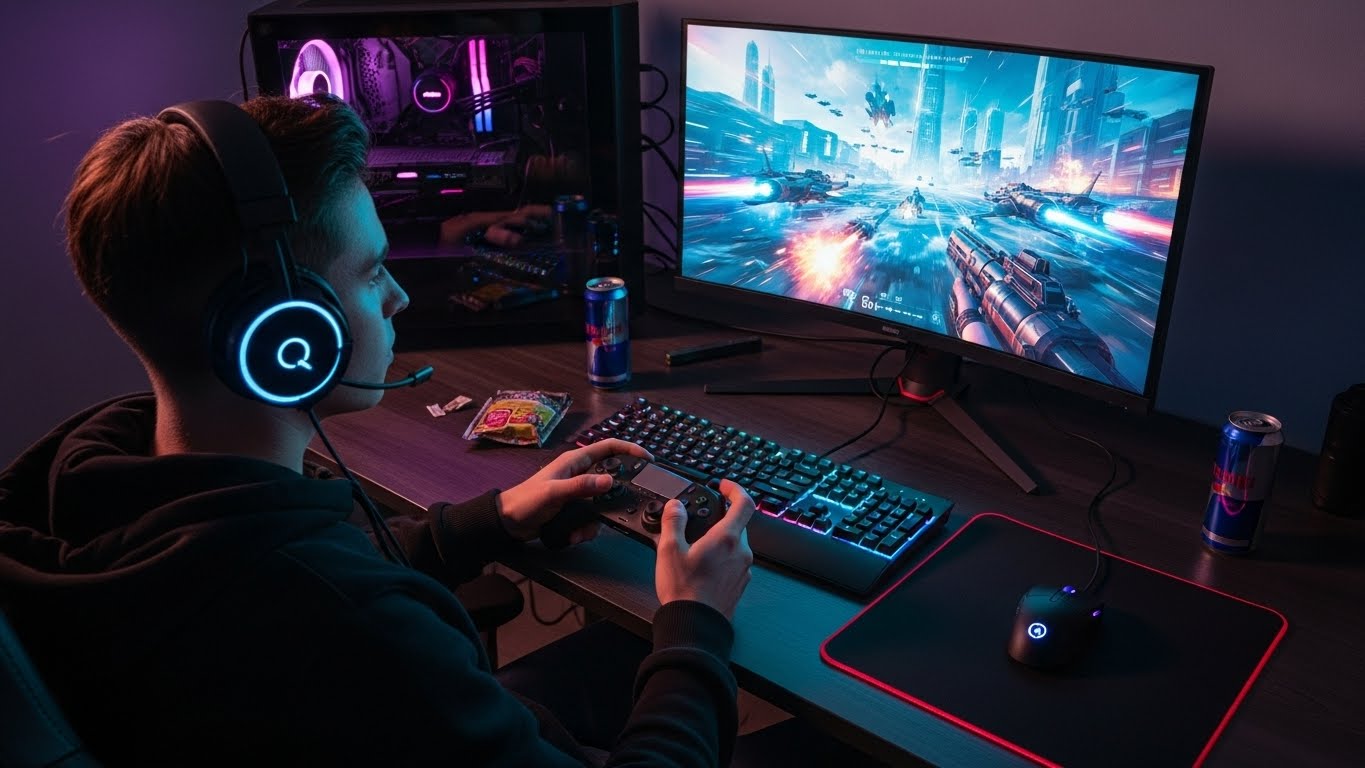
Gaming has become one of the most dominant forms of entertainment in the world. It has evolved from simple pixelated adventures to hyper-realistic worlds that offer not only entertainment but also a rich cultural and social experience. From the earliest arcade games that captivated players in smoky halls to the massive multiplayer universes where players from around the globe connect, gaming has grown in both complexity and significance. As technology continues to push the boundaries of what’s possible, gaming is no longer just about playing—it’s about exploring new worlds, telling unique stories, and engaging with a community in ways that were once unimaginable. In this blog post, we will explore how gaming has evolved, how it shapes culture today, and where it’s heading in the future.
The Humble Beginnings of Video Games
The history of video games is marked by a steady progression of innovation, starting with rudimentary concepts that laid the groundwork for what would later become a global industry. The first video games were simple, with basic graphics and gameplay. Classic games like Pong, which simulated a game of table tennis, and Space Invaders, with its iconic aliens and straightforward mechanics, introduced the idea of interactive entertainment. These games didn’t rely on complex storylines or graphics. Instead, they focused on simple mechanics and gameplay loops that were easy to understand yet difficult to master.
In the 1980s, the video game industry began to grow rapidly, with the release of consoles like the Nintendo Entertainment System (NES) and games like Super Mario Bros. and The Legend of Zelda. These titles were groundbreaking for their time, offering not just engaging gameplay but also the start of storytelling in gaming. While simple by today’s standards, these early games laid the foundation for the complex narratives and open worlds that would follow.
The introduction of home consoles meant that gaming could now be enjoyed in the comfort of one’s home, sparking a cultural shift. Instead of arcade machines, people could now invest in consoles and build gaming libraries to enjoy at their leisure. Gaming became more accessible, and its appeal expanded beyond a niche group of enthusiasts to a broader demographic.
The Rise of 3D and Open Worlds
As technology advanced, so did the complexity of games. The transition from 2D to 3D graphics marked a major turning point. This shift began with the release of Super Mario 64, a revolutionary game that redefined platformers and introduced players to fully three-dimensional environments. The ability to explore vast, open spaces in a 3D world made the experience feel much more immersive. Players could now move in any direction, jump, and interact with the environment in ways that were previously impossible.
The 1990s and early 2000s saw a surge in the popularity of open-world games. Titles like The Elder Scrolls III: Morrowind, Grand Theft Auto III, and The Legend of Zelda: Ocarina of Time offered players enormous, interconnected worlds where they could explore at their own pace, interact with characters, and embark on various quests. This style of gameplay emphasized freedom and choice, allowing players to carve their own path through the game world.
In these expansive worlds, players didn’t just follow linear storylines; they were given the tools to shape their own experience. This sense of freedom became a key selling point for open-world games, offering immersion and player choice that felt organic and personal. These games pushed the boundaries of what was possible, both in terms of design and narrative depth.
The Social Shift: From Solo Experiences to Multiplayer Worlds
Another critical shift in gaming occurred with the rise of online multiplayer games. In the early days, gaming was largely a solitary or local multiplayer activity. Friends would gather in front of a single screen for split-screen gaming sessions, or they would compete against one another in local tournaments. But the internet opened up new possibilities, allowing players to connect with others across the globe. Games like Warcraft, StarCraft, and Counter-Strike revolutionized the way people played, making it possible to compete or cooperate with others online.
The 2000s saw the explosion of online multiplayer gaming, with World of Warcraft (WoW) leading the charge as a massively multiplayer online role-playing game (MMORPG). Players could now live out entire virtual lives in a persistent online world. The game allowed them to form guilds, complete quests together, and interact with thousands of other players simultaneously. WoW became a cultural phenomenon, with millions of players logging in daily to explore its ever-expanding world.
At the same time, competitive gaming began to take off, with games like Halo 2 and Call of Duty offering fast-paced action and competitive multiplayer modes. Esports, the competitive gaming industry, grew rapidly as professional tournaments began to attract sponsorships and large audiences. Platforms like Twitch allowed fans to watch live-streamed tournaments, bringing gaming into the mainstream as a spectator sport.
Today, gaming is more social than ever. Online multiplayer games like Fortnite, Apex Legends, and League of Legends allow players to team up with friends, communicate with strangers, and compete for glory. In these virtual worlds, friendships are formed, rivalries are born, and players bond over shared experiences.
The Age of Streaming and Content Creation
Streaming and content creation have added yet another layer to the gaming experience. Platforms like Twitch, YouTube, and Mixer have given rise to a new breed of celebrity: the gaming influencer. Streamers, content creators, and esports professionals now have massive followings, and their influence extends far beyond just gaming. These creators are not only entertaining audiences but are also shaping the conversation around gaming culture, highlighting trends, offering tutorials, and promoting games.
What’s interesting about this new era of gaming is the way it blends entertainment with interactivity. Viewers on platforms like Twitch can watch their favorite streamers live, comment on their gameplay, and even interact with them in real-time through chat. It has transformed gaming from a solo activity to a shared, community-driven experience. Some viewers may not even play the games themselves but instead tune in to watch others play, often for hours on end. This form of passive participation is reshaping what it means to be part of a gaming community.
Content creators are also finding success in creating “Let’s Play” videos, game reviews, and live commentary, allowing them to build personal brands around their gaming skills and personalities. It has become a legitimate career path for many young individuals, blurring the lines between traditional entertainment and gaming.
The Immersion of Virtual and Augmented Reality
As gaming continues to evolve, the introduction of virtual reality (VR) and augmented reality (AR) has opened up entirely new possibilities. VR allows players to step inside the game world and interact with it as if they were physically present. The experience of strapping on a headset and seeing a fully immersive 3D world come to life is unlike anything that traditional gaming can offer. VR games like Half-Life: Alyx, Beat Saber, and No Man’s Sky VR have introduced players to environments that feel tangible and alive.
Meanwhile, augmented reality has taken the world by storm with games like Pokémon GO, which combine the virtual and real worlds in creative ways. Players can explore their physical surroundings while interacting with digital objects, creating a hybrid experience that blends gaming with the real world. These technologies are still in their early stages but have immense potential for the future of gaming.
As VR and AR technologies continue to advance, we can expect even more immersive and interactive experiences. Players will likely be able to interact with game worlds in ways that were once the stuff of science fiction. These innovations could redefine what gaming is and how we experience it, making it feel more like a true extension of our physical reality.
The Future of Gaming: AI, Cloud Gaming, and Beyond
Looking ahead, the future of gaming is exciting and full of promise. Artificial intelligence (AI) is likely to play an increasingly significant role in the next generation of games. AI could be used to create more intelligent NPCs (non-playable characters) that adapt to the player’s actions in real-time. It could also allow for the development of more dynamic, evolving worlds where the game world changes based on the player’s decisions.
Cloud gaming, too, is expected to revolutionize the industry. With services like Google Stadia and Xbox Cloud Gaming, players no longer need powerful consoles or high-end PCs to run graphically demanding games. Games are streamed directly from the cloud, allowing players to play on a variety of devices—from smartphones to smart TVs. This technology will make gaming more accessible to a wider audience and could eliminate the need for expensive hardware in the future.
Additionally, the role of storytelling in gaming will continue to grow. As the medium matures, we may see more interactive narratives that offer even greater depth and complexity. Developers will continue to push the boundaries of what’s possible, creating games that offer more than just entertainment but also provoke thought and spark conversation.
Conclusion: Gaming as a Cultural Force
Gaming has come a long way from its early days of simple arcade games and home console systems. Today, it is a cultural force that shapes entertainment, technology, and social interaction. Whether it’s through immersive storytelling, online multiplayer experiences, or cutting-edge technology like VR and AR, gaming continues to redefine what it means to play and to interact with virtual worlds. As we move further into the 21st century, it’s clear that gaming will remain at the forefront of entertainment, continuously evolving and pushing the boundaries of what is possible.
As gaming continues to grow and innovate, it will undoubtedly remain a major force in shaping the way we experience stories, connect with others, and explore new realities. The future of gaming is bright, and the next chapter is sure to be even more thrilling than the last.