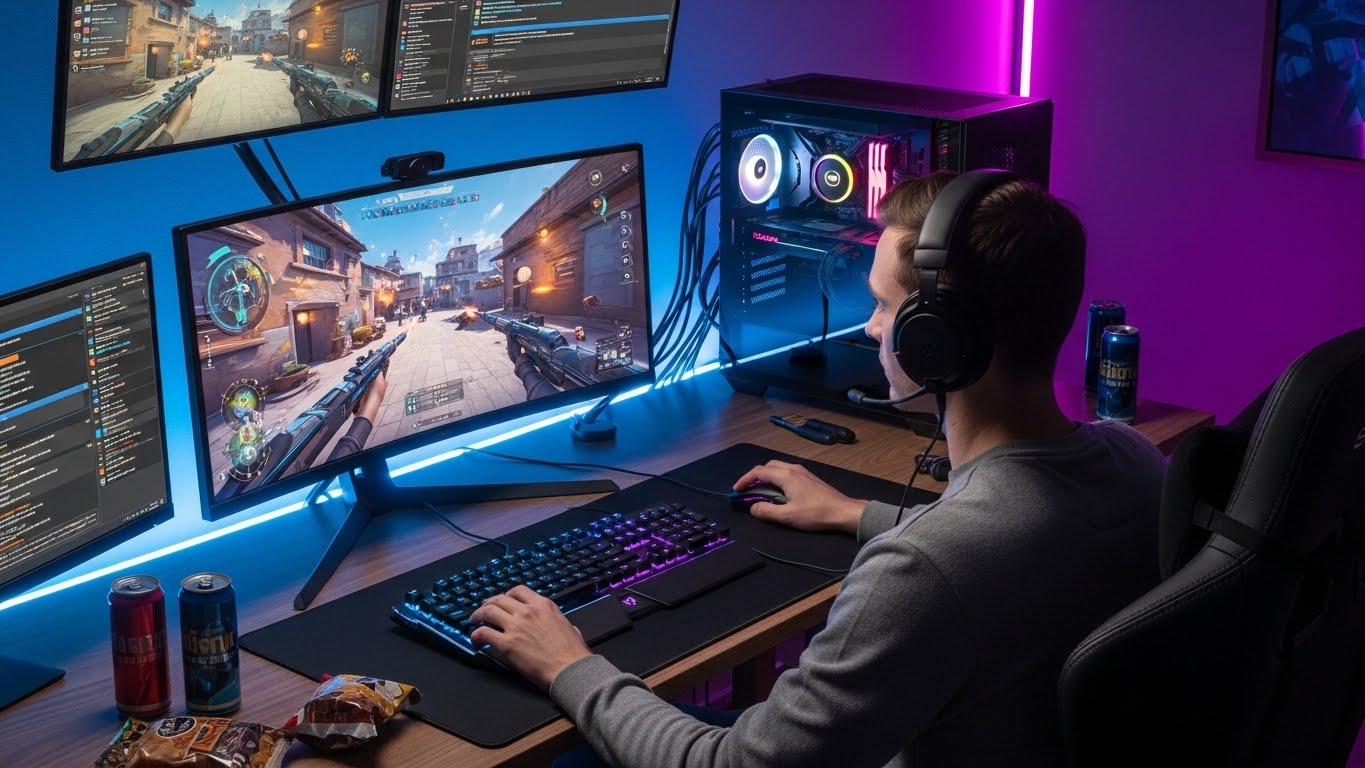

Introduction: The Transformation of Entertainment
Video games have evolved into one of the most dominant forms of entertainment in the world today. What began as simple pixel-based entertainment with games like Pong and Space Invaders has grown into a multifaceted global industry. From arcade halls to personal gaming consoles and immersive online worlds, video games have shaped how millions of people around the world spend their leisure time. The gaming landscape is constantly evolving, with new technologies, genres, and trends emerging regularly.
In this blog post, we’ll explore how gaming has transitioned from an obscure hobby to a mainstream cultural and economic force, touching on the different aspects that make video games such a significant part of modern life. We’ll look at the evolution of gaming technology, the rise of mobile and online gaming, the impact of esports, and the increasing recognition of video games as an art form.
The Early Days of Video Games: Humble Beginnings
The origins of video gaming can be traced back to the 1950s and 1960s, with simple computer-based games developed for early university and military research purposes. These games were rudimentary by today’s standards, but they paved the way for the future of entertainment. In the 1970s, the first commercially successful arcade games, Pong and Space Invaders, brought video gaming into the mainstream, captivating players with their simplicity and addictiveness.
The 1980s marked a significant shift in gaming culture. With the advent of home consoles, such as the Atari 2600, gaming became accessible to families in their living rooms. This was a pivotal moment in gaming history, as it allowed people to experience interactive entertainment without needing to visit an arcade. The era saw the rise of iconic franchises like Super Mario, Pac-Man, and Donkey Kong, which are still beloved today.
The Rise of Home Consoles and Personal Computers
As technology advanced, so too did the gaming experience. In the 1990s, home consoles like the Super Nintendo and Sony PlayStation offered more sophisticated graphics, deeper gameplay, and a wider range of genres. The introduction of 3D graphics in games such as Super Mario 64 and Final Fantasy VII ushered in a new era of immersive gaming.
Personal computers also gained prominence during this period, with titles like Doom and Warcraft pushing the limits of gaming technology and introducing gamers to online multiplayer experiences. The PC gaming scene became a major force, leading to the development of gaming-specific hardware like graphics cards and specialized gaming keyboards and mice. These improvements enabled even more intricate graphics and gameplay mechanics, turning video games into an ever-expanding universe of possibility.
As technology progressed, the gaming world began to adopt new types of media, from CD-ROMs to DVDs, enabling more storage space for increasingly complex games. This allowed developers to create games with intricate storylines, expansive open worlds, and sophisticated multiplayer features.
The Emergence of Mobile Gaming
With the launch of smartphones, the gaming world took another major turn. In the early 2000s, mobile phones were primarily used for calling and texting, but the advent of the iPhone in 2007 changed everything. The iPhone, with its powerful hardware and touchscreen interface, opened up the world of gaming to a whole new generation. Mobile gaming became mainstream thanks to the accessibility and portability of smartphones.
Games like Angry Birds and Fruit Ninja became cultural touchstones, offering quick and casual entertainment on the go. The rise of app stores like Apple’s App Store and Google Play made it easier than ever for developers to reach audiences, with millions of games being downloaded each day.
Mobile gaming has democratized the gaming experience, allowing people of all ages and backgrounds to engage with video games without the need for expensive consoles or high-end PCs. Casual gaming on mobile devices has introduced entire new demographics to gaming, making it more accessible than ever. Today, mobile gaming is a multi-billion-dollar industry, with genres ranging from puzzle games to strategy games, battle royales, and even RPGs.
The Rise of Online and Multiplayer Gaming
One of the most significant shifts in the gaming industry came with the rise of online multiplayer gaming. Early multiplayer games were limited to local play, but the internet changed all that. By the early 2000s, broadband internet became widely available, enabling players to compete or cooperate with others in real-time, no matter where they were in the world.
Games like World of Warcraft, Halo 2, and Call of Duty 4: Modern Warfare revolutionized how people interacted with games, leading to the rise of online communities. Players could now communicate with each other in real time, form guilds or clans, and compete in massive online battles. The rise of online platforms like Xbox Live and PlayStation Network further facilitated this shift, making it easier for players to connect and engage with others across the globe.
In recent years, games like Fortnite and League of Legends have become cultural phenomena, attracting millions of players each day. These multiplayer games not only offer exciting gameplay but also provide a platform for social interaction, with players forming friendships and communities around their shared gaming experiences.
Esports: The Competitive Side of Gaming
Esports, or competitive gaming, has emerged as one of the fastest-growing sectors of the gaming industry. What started as small-scale competitions among friends has now evolved into professional leagues and tournaments with millions of dollars in prize money. Games like League of Legends, Dota 2, and Counter-Strike have built dedicated esports ecosystems, with teams of professional players competing in tournaments broadcast to millions of viewers worldwide.
The esports industry has grown beyond just the players. Streaming platforms like Twitch and YouTube Gaming have created a space where fans can watch their favorite players in action, interact with streamers, and even participate in live chats. The global reach of esports has also led to sponsorships from major brands, partnerships with sports organizations, and even inclusion in multi-sport events like the Asian Games.
The competitive gaming scene continues to evolve, with new titles and formats emerging, and esports now occupies a prominent place in mainstream entertainment. As the industry grows, it is expected to become a major part of the global sporting landscape.
Gaming as an Art Form
As the gaming industry continues to mature, there has been a growing recognition of video games as an art form. Unlike passive forms of entertainment such as movies or TV shows, video games are interactive, allowing players to shape the outcome of the story through their actions. This unique aspect of video games has made them a powerful storytelling medium.
Games like The Last of Us, Red Dead Redemption 2, and Journey showcase the potential for video games to deliver deep, emotional experiences. These games feature captivating narratives, stunning visuals, and intricate character development. Video game developers are increasingly seen as artists, with their work often compared to the work of filmmakers, writers, and musicians.
The art of video game design includes a wide range of elements, from world-building and character development to music composition and environmental storytelling. Video games provide players with a level of immersion and emotional connection that other forms of entertainment simply cannot match.
The Future of Gaming
The future of gaming is bright, with technology continuing to push the boundaries of what’s possible. Virtual reality (VR) and augmented reality (AR) are likely to be major players in the next generation of gaming, providing even more immersive experiences. Cloud gaming is also on the rise, allowing players to stream high-quality games directly to their devices without the need for expensive hardware.
Moreover, artificial intelligence (AI) and machine learning are set to play an increasingly important role in the development of gaming. AI could allow for more dynamic and adaptive gameplay, where NPCs (non-playable characters) react intelligently to players’ actions, creating a more realistic and engaging world.
As gaming continues to evolve, it is likely that it will become an even more integral part of our lives, providing not just entertainment, but new ways to learn, connect, and communicate. The potential for games to become a force for education, social change, and even healthcare is immense.
Conclusion: Gaming’s Global Impact
From its humble beginnings as an arcade pastime to its current status as a global cultural force, gaming has transformed entertainment as we know it. The evolution of gaming technology, the rise of online multiplayer, and the emergence of esports have shaped gaming into something far more influential than anyone could have imagined.
As technology continues to advance, we can expect even more groundbreaking innovations that will redefine the way we play and interact with video games. Whether through new gameplay experiences, deeper social connections, or greater artistic expression, gaming will continue to play a central role in the lives of millions of people worldwide.
The future of gaming is limitless, and its impact will continue to shape entertainment, culture, and society for years to come.