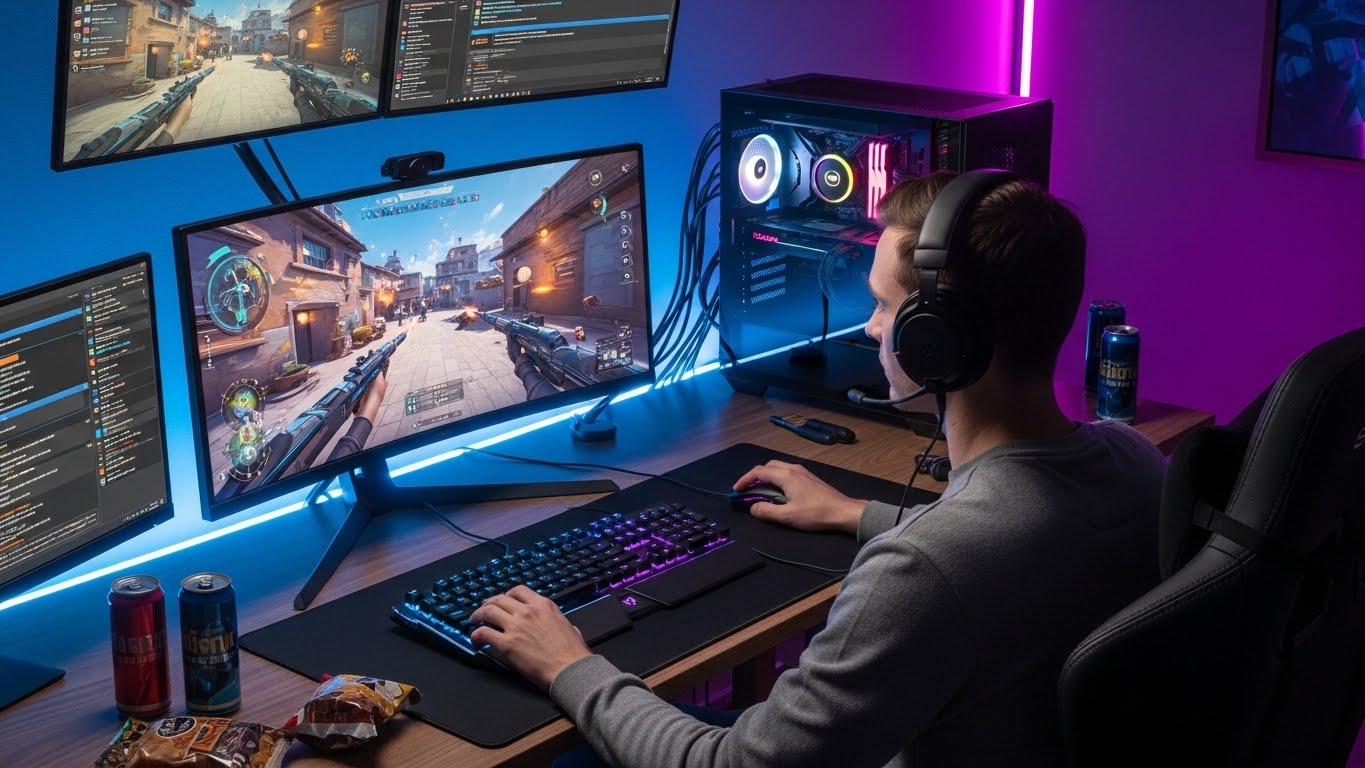

In the last few decades, gaming has grown into something much larger than just a form of entertainment. It’s a thriving global culture that spans across all demographics, bringing together millions of people who share a common interest in virtual worlds. From pixelated platforms to photorealistic landscapes, the evolution of gaming has reshaped how we socialize, compete, and even experience stories. But what exactly makes gaming such a powerful and transformative medium? Let’s explore how gaming has evolved and the impact it has on society today.
The Birth of Gaming: Early Days of Arcade Machines
The journey of gaming began in the 1970s and early 1980s, when arcade machines like Pong and Space Invaders captured the imaginations of the public. These games were simple by today’s standards, relying on basic 2D graphics and minimal interaction. Yet, they laid the foundation for a new form of entertainment that would eventually revolutionize the entertainment industry. Arcades became gathering places for young people, where they would compete for high scores and bragging rights. Gaming, at this time, was a communal activity, largely confined to public spaces where strangers could meet and bond over their shared love for these new interactive experiences.
While the graphics were rudimentary and the gameplay straightforward, these early games were an introduction to the idea of “game mechanics” — the rules and systems that make games enjoyable and challenging. They weren’t just about completing tasks; they were about testing skill, reflexes, and sometimes strategy. These games set the stage for the more complex experiences to come.
3D Graphics and the Rise of Home Consoles
The real turning point for gaming came in the mid-1990s, with the advent of 3D graphics. Early pioneers like Super Mario 64 and Tomb Raider introduced players to expansive virtual worlds that they could explore in a new dimension. No longer confined to the flat screens of the past, players were now able to move freely through vibrant 3D environments, interacting with characters and solving complex puzzles. This shift created an entirely new sense of immersion and made gaming more than just a pastime — it was an experience.
At the same time, the 1990s saw the rise of home gaming consoles. Platforms like Sony’s PlayStation, Nintendo 64, and Microsoft’s Xbox allowed players to enjoy cutting-edge graphics, complex gameplay, and rich storylines right in their living rooms. The introduction of CD-ROMs and later DVDs as media formats further boosted the potential of gaming, offering developers a way to incorporate hours of content, cinematic sequences, and fully orchestrated soundtracks into their games.
The Age of Storytelling: A New Dimension to Games
By the early 2000s, gaming was no longer just about high scores or level completion. Developers began to focus on telling powerful, immersive stories that would engage players on an emotional level. Games like Final Fantasy VII, Halo, and The Elder Scrolls III: Morrowind started to feature rich narratives, fully fleshed-out characters, and complex worlds that players could lose themselves in for hours. For the first time, games became a platform for deep storytelling, challenging the notion that video games were solely for children or casual players.
This shift also marked the rise of RPGs (role-playing games), which emphasized choice and consequence. In these games, players could shape their characters’ destinies and experience different outcomes depending on the decisions they made. Titles like Mass Effect and The Witcher 3: Wild Hunt further refined this concept, allowing players to not only change the course of the game but to deeply engage with the characters and themes that unfolded along the way. The merging of gameplay and narrative opened up new possibilities, making gaming an emotionally resonant medium.
Online Multiplayer: A Global Community
One of the most significant developments in modern gaming has been the growth of online multiplayer experiences. In the early 2000s, games like World of Warcraft and Call of Duty gave players the opportunity to compete and cooperate in a shared digital space. This move towards multiplayer gaming broke down geographical barriers, allowing players from around the world to come together and play as a community.
The rise of MMOs (Massively Multiplayer Online Games) and competitive multiplayer games created virtual worlds where players could form friendships, build teams, and engage in large-scale battles. These games weren’t just about playing; they were about community building. Online platforms like Xbox Live and PlayStation Network facilitated this growth, providing an easy way for players to connect with friends and strangers alike. This shift also gave birth to esports, which has turned gaming into a competitive sport with professional leagues, sponsors, and international tournaments.
Online gaming has changed the way people interact, making gaming a social experience. Whether it’s teaming up with friends to defeat a raid boss or competing in a fast-paced battle royale, online multiplayer has brought a sense of camaraderie and competition that goes beyond the confines of traditional single-player games.
Mobile Gaming: Gaming for Everyone
As smartphones became more powerful, they became a gateway for gaming to reach an even larger audience. Games like Candy Crush, Pokémon GO, and Clash of Clans introduced gaming to casual players who had never touched a console or PC. These mobile games were designed for quick, accessible play sessions, making it possible to game anywhere — on a bus, in a waiting room, or while taking a break at work.
Mobile gaming democratized access to games, allowing people from all walks of life to experience the joys of gaming without needing specialized hardware or knowledge. The appeal of these games lies in their simplicity and addictive mechanics, making them perfect for short bursts of play. Yet, as mobile gaming evolved, developers began to offer deeper and more complex experiences that rival traditional gaming platforms.
Virtual Reality and Augmented Reality: The Future of Gaming
Looking to the future, virtual reality (VR) and augmented reality (AR) hold immense potential to transform the way we experience games. VR headsets like Oculus Rift and HTC Vive allow players to immerse themselves fully in virtual environments, offering a level of immersion that traditional gaming cannot match. In VR, players can physically move around, interact with the game world, and experience new dimensions of gameplay. Games like Beat Saber and Half-Life: Alyx have demonstrated the power of VR, pushing the boundaries of what gaming can be.
Augmented reality takes a different approach, blending the real world with digital elements. Pokémon GO is a perfect example of AR gaming, where players interact with virtual characters in the real world through their phone screens. This type of gaming has the potential to blur the lines between reality and fantasy, allowing players to engage with their surroundings in entirely new ways.
As VR and AR technologies mature, they will offer even more realistic and interactive experiences, further elevating gaming to new heights.
The Cultural Impact of Gaming
Gaming has moved far beyond being just a form of entertainment. It is now a significant part of our culture, shaping how we interact with each other, how we perceive storytelling, and how we define community. The rise of gaming influencers, streamers, and content creators has made gaming a prominent part of popular culture, with personalities gaining millions of followers across platforms like Twitch and YouTube. Gamers have become celebrities, and their communities often revolve around shared interests in specific games or genres.
Moreover, gaming has had an influence on other industries, including film, music, and technology. Many blockbuster movies and TV shows are based on popular video game franchises, and gaming has even inspired music genres, with soundtracks and songs inspired by game scores reaching the mainstream.
Conclusion: Gaming’s Endless Potential
The world of gaming is constantly evolving, and its potential seems limitless. From humble beginnings in arcades to the development of virtual reality, gaming has transformed from a niche hobby into a cultural powerhouse. As technology continues to advance, gaming will undoubtedly continue to break new ground, offering fresh experiences and engaging new audiences.
Whether you’re a casual gamer or a die-hard enthusiast, the digital worlds we explore in games will continue to be an integral part of our cultural and social fabric. Gaming is not just a pastime; it is a global language that brings people together, tells stories, and challenges our perceptions of what entertainment can be. As we look ahead, the possibilities for what gaming can offer seem boundless.